

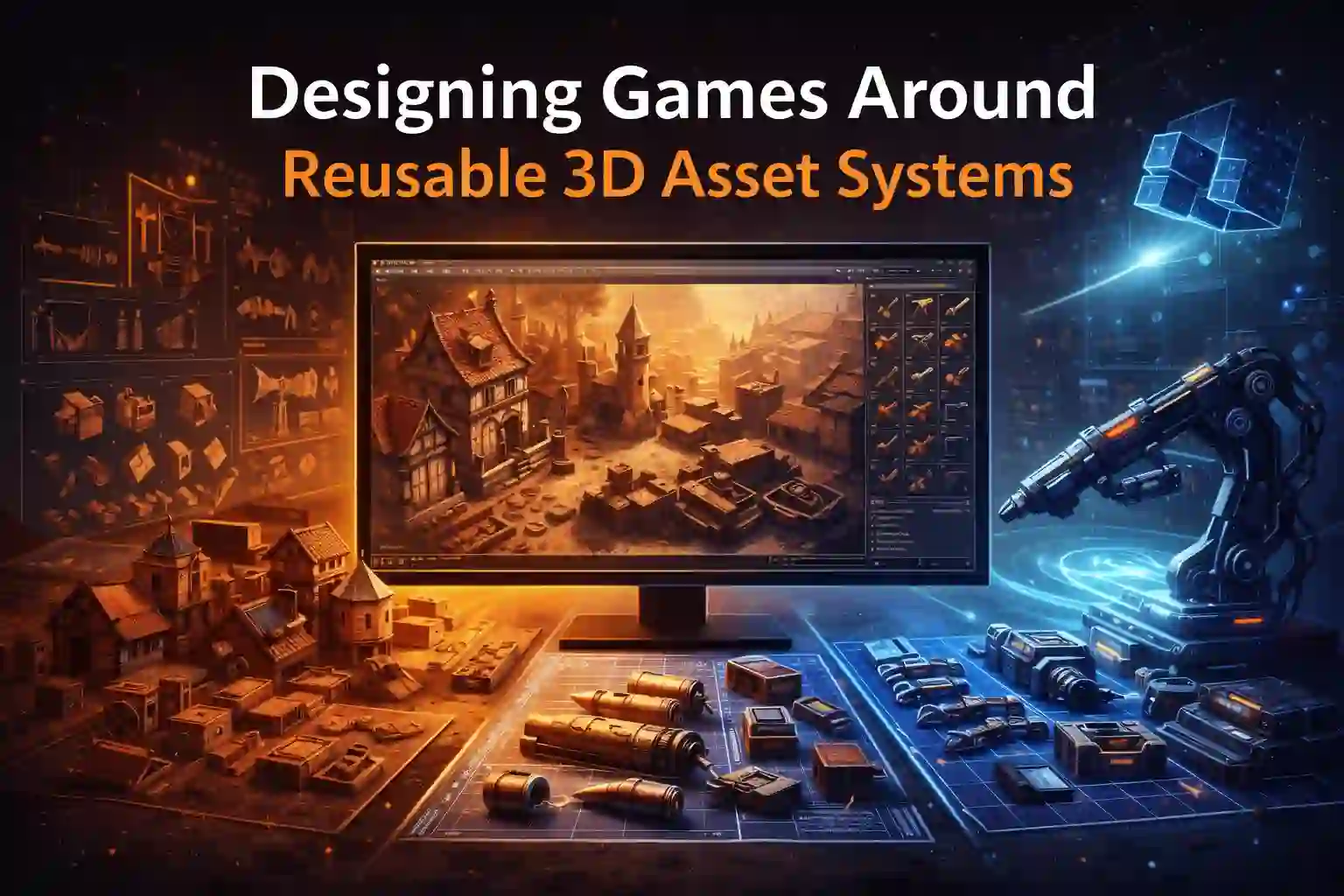
Designing Games Around Reusable 3D Asset Systems
by Animatics Asset Store in Blog on January 23, 2026You Have a Game Idea. Time Is the Enemy. You open your engine. The concept feels solid.Then reality hits. You need dozens of props, weapons, environments, and variations. Each asset eats time. Each change breaks something else. You fix one mesh and suddenly five levels feel outdated. I’ve been there. You probably have too. That’s why reusable 3D asset systems matter more than most developers realize. They don’t just save time. They change how you design games from day one.
In this article, I’ll show you how to think in systems, not assets. You’ll learn how reusable structures reduce rework, scale content faster, and keep visual consistency without burnout.
What Are Reusable 3D Asset Systems Really?
Most developers think reuse means copying assets.
That mindset limits growth.
Reusable 3D asset systems focus on structure, not duplication. You design assets to adapt, combine, and evolve without rebuilding from scratch.
Think modular walls instead of fixed rooms.
Think weapon parts instead of single meshes.
Think shared materials instead of isolated textures.
At their core, reusable 3D asset systems rely on:
• Modular geometry
• Consistent scale and pivot rules
• Shared texture sets and trim sheets
• Parameter-driven variations
This approach supports both indie teams and large studios. According to a GDC production workflow study, teams using modular asset pipelines reduced environment production time by nearly 40 percent.
That difference compounds fast.
Why Games Built on Reusable 3D Asset Systems Scale Better
Faster Iteration Without Visual Debt
You will change your game. Always.
Levels evolve. Mechanics shift. Art direction tightens.
Reusable 3D asset systems absorb change without collapsing. When you adjust one core module, the update flows across the project.
Instead of fixing 30 props, you fix one system.
That keeps momentum alive.
Consistency Without Micromanagement
Visual inconsistency kills immersion.
Players notice when assets don’t belong together.
Systems enforce rules automatically.
Shared proportions
Unified materials
Consistent wear and detail language
This keeps your world cohesive even when multiple artists contribute.
Designing Modular Assets That Actually Work
Start With Constraints, Not Creativity
Unlimited freedom creates chaos.
Before modeling anything, define rules:
• Grid size
• Unit scale
• Rotation increments
• Naming conventions
These constraints unlock reuse. They don’t limit creativity. They focus it.
Reusable 3D asset systems thrive on predictability.
Build Around Connection Points
Every modular asset needs logic.
Where does it connect
How does it rotate
What can attach to it
Design sockets, pivots, and snap points early. Retroactive fixes waste time and break levels.
Materials and Textures Make or Break Reuse
Trim Sheets Beat Unique Textures
Unique textures look great. They also destroy scalability.
Trim sheets allow dozens of assets to share one texture while still looking distinct. This boosts performance and speeds iteration.
Reusable 3D asset systems almost always rely on trim workflows.
Benefits include:
• Lower memory usage
• Faster UV mapping
• Easy visual updates
Change one trim. Update everything.
Parameterized Materials Multiply Variations
Smart materials add flexibility without extra assets.
Color swaps
Roughness tweaks
Dirt intensity sliders
These options create visual diversity from a single mesh. Your library grows without added complexity.
How Reusable 3D Asset Systems Improve Performance
Performance issues often hide in asset chaos.
Too many materials
Too many draw calls
Too many unique meshes
Systems reduce all three.
According to Unity’s optimization documentation, shared materials and modular meshes can cut draw calls by up to 50 percent in dense scenes.
That directly improves frame rate and stability.
Reusable 3D asset systems help you optimize by design, not by cleanup.
The Workflow Shift Most Developers Miss
Here’s the mental shift.
Stop asking
“How does this asset look alone?”
Start asking
“How does this asset behave in a system?”
That question changes everything.
You design parts, not objects.
You plan reuse before polish.
You build libraries, not folders.
This mindset separates scalable projects from fragile ones.
A Practical Way to Build Faster Without Cutting Corners
At some point, you’ll need reference-quality assets to study or extend. Building everything from zero slows learning.
This is where curated libraries help.
I’ve seen developers use Animatics Asset Store as a practical reference point inside their pipeline. Not as a shortcut, but as a way to study modular breakdowns, material reuse, and asset consistency across packs.
Seeing how systems come together in production-ready assets can save weeks of trial and error. You still adapt them. You still make them yours. But you start smarter.
That’s how experienced teams work.
Common Mistakes That Break Reusable Systems
Over-Customization Too Early
Detail addiction kills reuse.
If every asset feels unique, none of them scale. Start simple. Add variation through materials and assembly, not sculpted noise.
Ignoring Naming and Structure
Messy folders destroy systems.
Use clear naming. Group assets logically. Keep variants organized. Future you will thank present you.
Forgetting Gameplay Needs
Assets don’t exist for art alone.
Reusable 3D asset systems must serve gameplay. Collision, readability, and navigation matter as much as visuals.
Always test assets in context.
Who Benefits Most From Reusable 3D Asset Systems
These systems help almost everyone, but especially:
• Indie developers with limited time
• Small teams sharing art responsibilities
• Live-service games with frequent updates
• Open-world projects with large environments
If your game will grow, systems are not optional. They are survival tools.
Your Next Step Starts Small
You don’t need to rebuild everything today.
Start with one category.
Weapons
Props
Environment pieces
Define rules. Build modules. Share materials.
Once you experience the speed and clarity of reusable 3D asset systems, going back feels impossible.
You’ll spend less time fixing assets and more time building games that actually ship.
And that’s the goal we’re all chasing.
Latest Blog



The article is good and clear in its message. The site is useful and
easy to use.